PicoSure Pro Tattoo Removal
Every tattoo is a different chemistry problem. Dr. O'Connell reads how your ink and your skin respond, and adjusts every session himself.
Text us: 425-644-5560View results
One of the largest PicoSure galleries in the country
We have photographed our patients since we started with PicoSure in 2014. Today our tattoo and pigment galleries hold more than 100 real cases, every one treated by Dr. O'Connell, with the number of sessions listed. In our own review of published before-and-after galleries, we have not found a larger physician-performed PicoSure collection. We would rather show you than tell you.
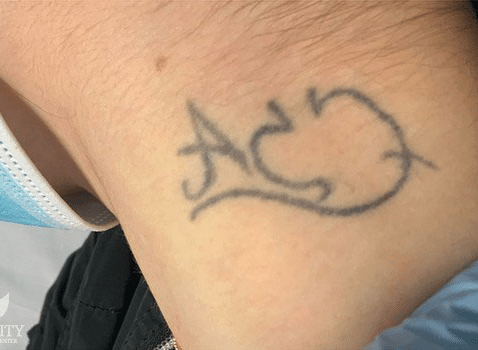
Before & After Real PicoSure Pro Patient Results
Before
After
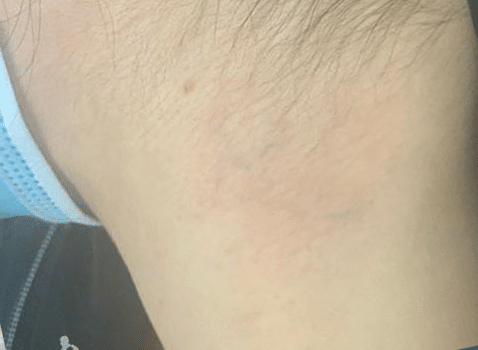
*Individual results may vary. Actual patient of Serenity Rejuvenation Center.
Watch PicoSure Pro Tattoo Removal in Action
How PicoSure Pro Works
A walkthrough with Dr. Stephen O’Connell
Patient Story
Tyler’s real tattoo removal journey
Before & After
Featured PicoSure Tattoo Removal Case Studies
Actual patients of Serenity Rejuvenation Center. Individual results vary.
- PicoSure Tattoo Removal
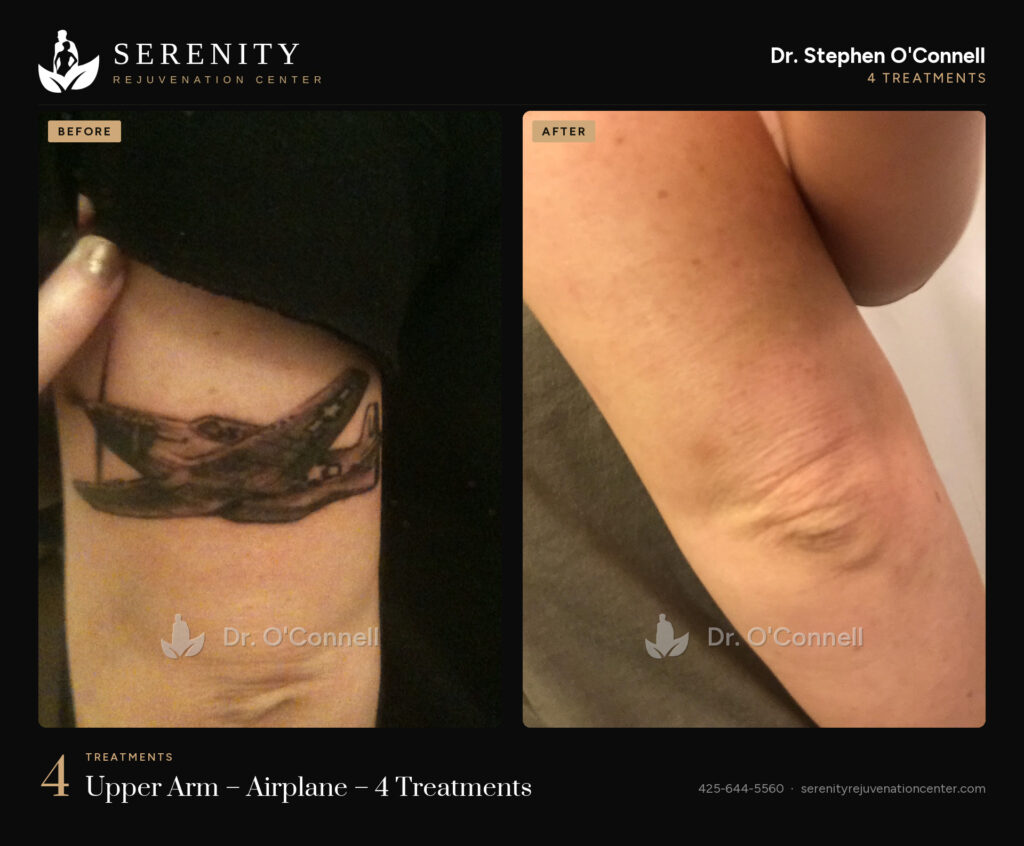 Upper Arm – Airplane – 4 TreatmentsView this case
- PicoSure Tattoo Removal
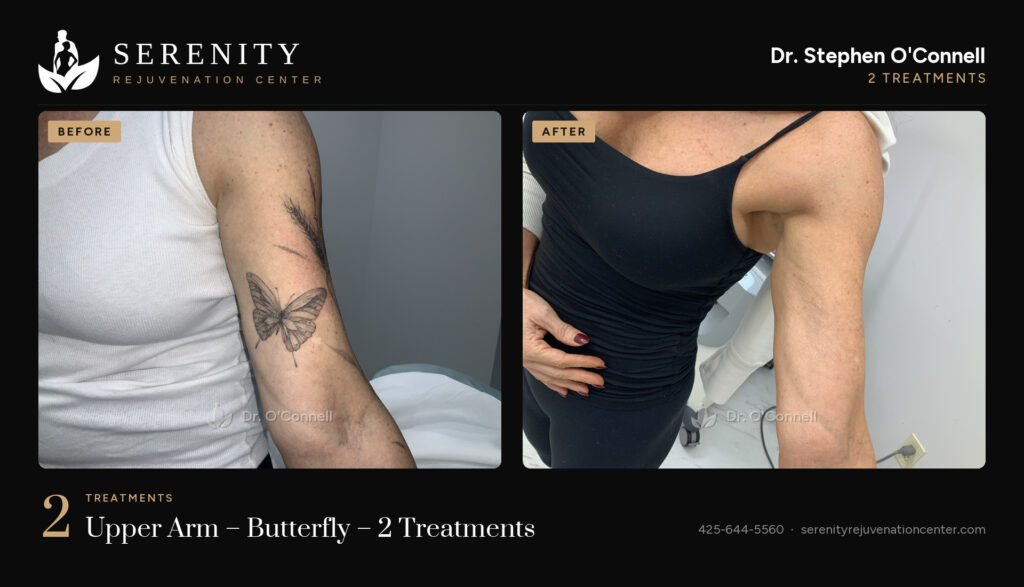 Upper Arm – Butterfly – 2 TreatmentsView this case
- PicoSure Tattoo Removal
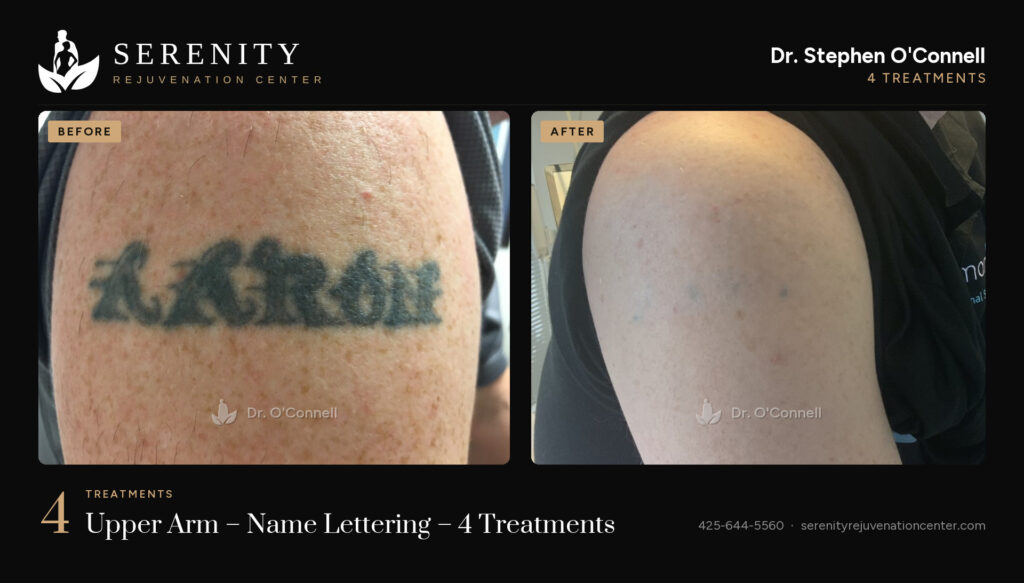 Upper Arm – Name Lettering – 4 TreatmentsView this case
- PicoSure Tattoo Removal
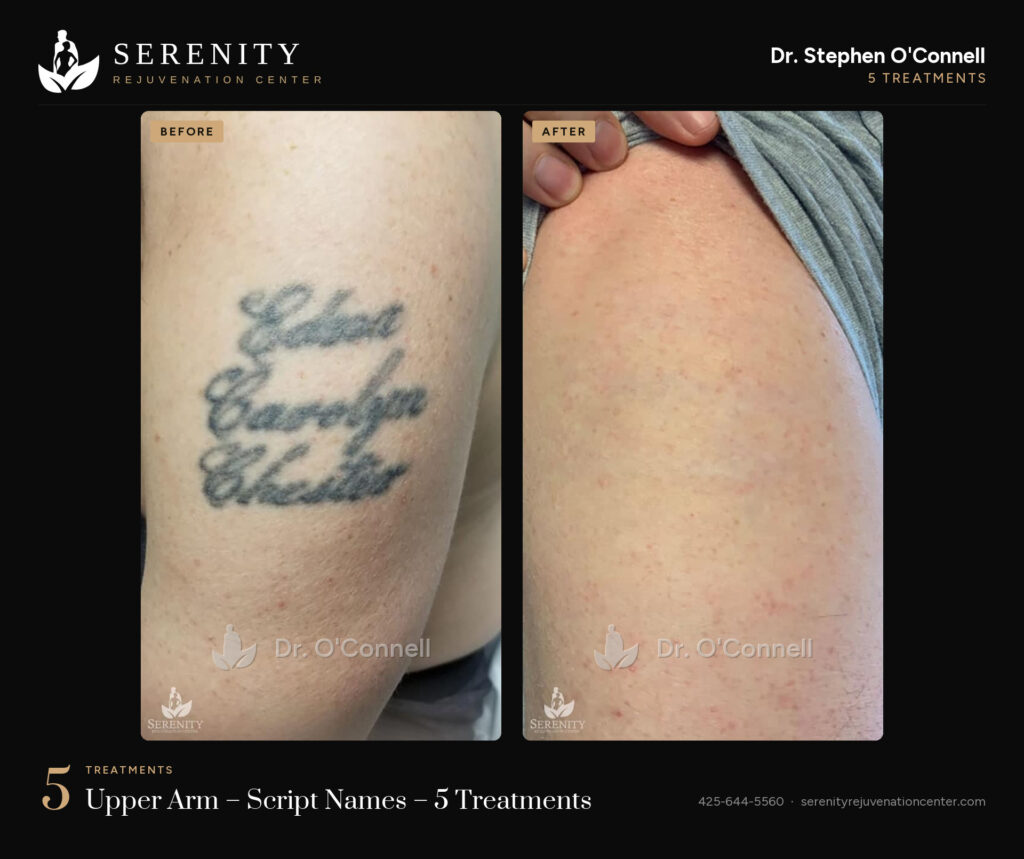 Upper Arm – Script Names – 5 TreatmentsView this case
- PicoSure Tattoo Removal
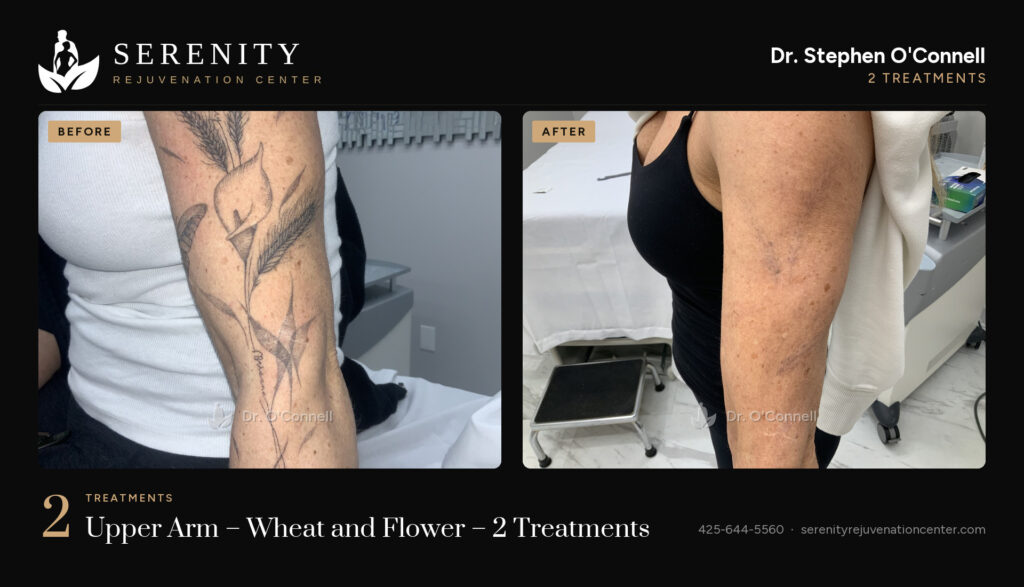 Upper Arm – Wheat and Flower – 2 TreatmentsView this case
- PicoSure Tattoo Removal
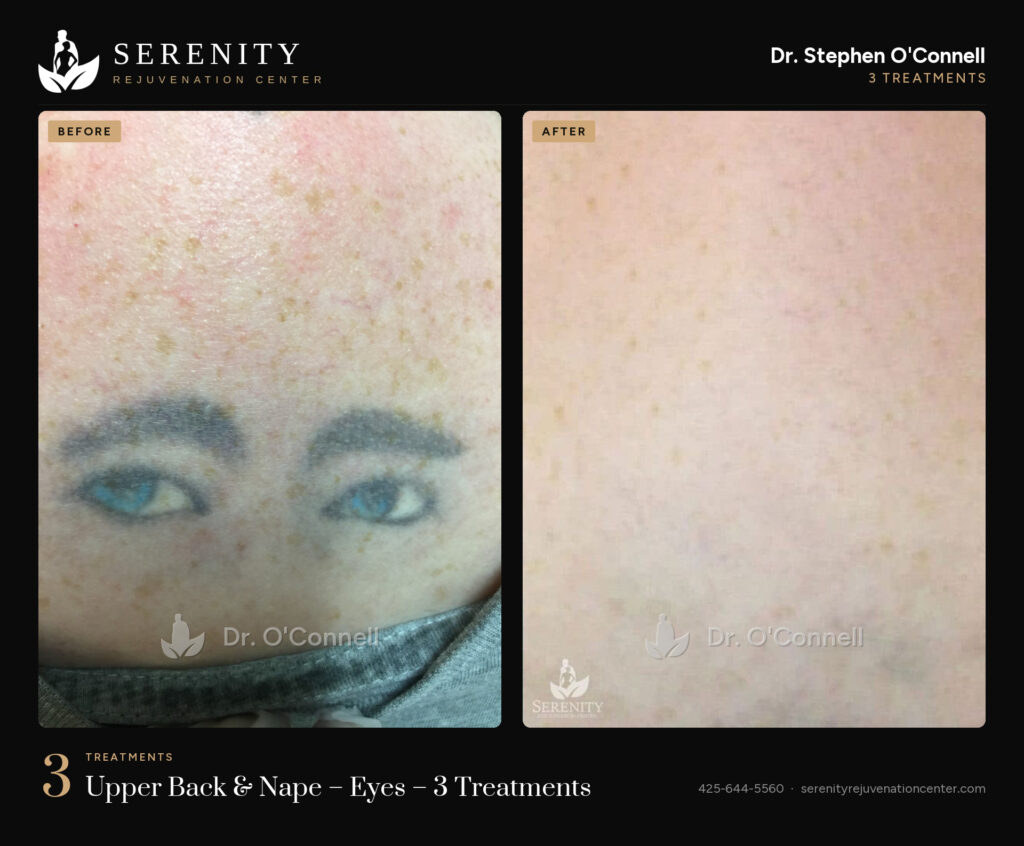 Upper Back & Nape – Eyes – 3 TreatmentsView this case
Why no two tattoos come off the same way
Tattoo ink is not one substance. There is no standard recipe, and the chemistry varies from brand to brand and even batch to batch. Five bottles of "black" can be five different formulas, so two tattoos that look identical can respond completely differently. No one can tell by looking.
That is why the treatment matters as much as the laser. The way your skin reacts in the first seconds and the first days, the immediate whitening, then the swelling or blistering, tells Dr. O'Connell how your particular ink is behaving. He uses that response to set the energy, spot size and pulse for the next pass and the next session. It is part science and part judgment built over twelve years of PicoSure treatments.
Pressure, not heat
PicoSure Pro fires pulses measured in trillionths of a second. At that speed, the ink is shattered mainly by a pressure wave rather than cooked by heat. The fragments are small enough for your immune system to carry away over the following weeks, which is why a tattoo keeps fading long after each visit.
- The area is cleansed and cooled for comfort.
- Settings are chosen for your ink, skin and location, then adjusted as the skin responds.
- Most treatments take under 30 minutes. Prescription numbing can be discussed for large or sensitive areas.
How your ink color affects removal
Black and dark blue
Absorb the laser best and usually clear the most predictably. Dense professional black still takes time.
Red and warm reds
PicoSure Pro's main wavelength is red light, and red pigment reflects red light. Reds clear more slowly and need patience.
Orange, brown and warm tones
Can brighten or shift color before they clear, especially in blended or cosmetic inks. It is a normal stage, so we keep going.
Blends, whites and pastels
Often contain metal oxides such as titanium dioxide, which can darken under laser. These are treated more carefully and sometimes test-spotted first.
Body art is usually built from single, pure colors. Cosmetic tattoos such as microblading are blends designed to look like skin and hair, which behave differently. See Microblading & Eyebrow Tattoo Removal.
How many treatments will I need?
Honestly, it depends, and anyone who quotes an exact number before treating you is guessing. Light or amateur ink can clear in a few sessions. Dense professional work and colors take more. The biggest factors:
- Ink chemistry, density and depth
- Colors in the design
- Age of the tattoo
- Location: areas closer to the heart clear faster than hands and feet
- Your skin type and immune response
Your response to the first session is the best predictor. Dr. O'Connell uses it to give you a realistic estimate and adjusts the plan as you go. Sessions are typically spaced 6 to 8 weeks apart.
Aftercare and preventing dark spots
The most common setback in tattoo removal is not the ink. It is post-inflammatory hyperpigmentation (PIH), your own skin reacting to treatment. In our experience, many patients who skip aftercare develop it, and it is even more common in medium and darker skin. In darker skin it shows up as dark spots that can look like ink that will not budge. In fair skin it often shows up as lingering redness instead. Either way, it slows your progress.
PIH is largely preventable. If you have any natural pigment in your skin at all, which is most people, Dr. O'Connell recommends a melanocyte-calming regimen starting right after your first treatment and continuing between sessions, along with careful settings and sun protection. We treat all skin types, with a plan to protect darker skin.
What to expect after each session
- Right after treatment the tattoo turns white for several minutes. This whitening is expected and fades on its own.
- Expect redness, swelling and sometimes blistering for a few days; that is part of how the skin responds.
- Keep the area clean and covered as directed, and do not pick at blisters or crusts.
- Avoid sun on the treated area during your treatment series.
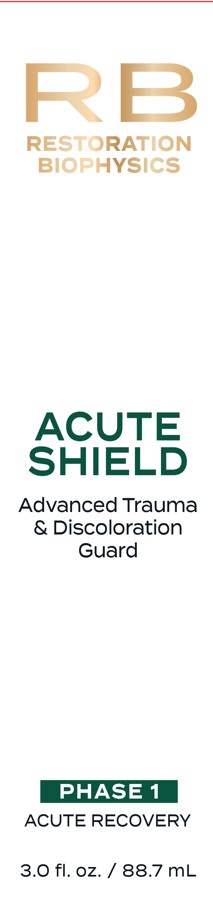
Acute Shield
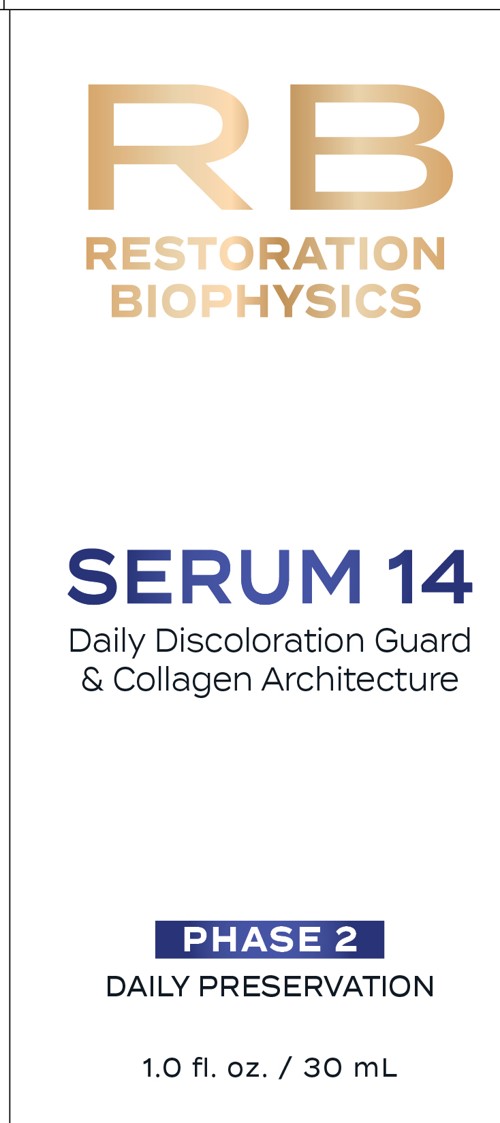
Serum 14
Why Dr. O'Connell created his own aftercare
For years, the go-to for preventing dark spots after laser has been hydroquinone. Dr. O'Connell still uses it when it fits. But it can be harsh on freshly treated skin, long-term use carries a rare risk of permanent blue-black discoloration (ochronosis), and after thousands of Pico treatments he saw that for some patients it simply was not enough on its own.
So he built a hydroquinone-free, two-step routine for skin that has just been treated:
- Acute Shield: also two in one. Used right after treatment in place of plain ointment, it protects and comforts healing skin while helping guard against dark spots.
- Serum 14: two in one, used daily once the skin has closed. It keeps tone even between sessions and, with copper peptides, supports the look of firmer, smoother skin.
Launching soon. Ask about it at your consultation.
Why patients choose Dr. O'Connell
- Every consultation and every Pico treatment performed by Dr. O'Connell himself, not a technician
- Treating with PicoSure since 2014; Cynosure Luminary Provider and ASLMS Fellow
- One of the largest physician-performed PicoSure galleries in the country, with sessions listed for every case
- Settings read and adjusted from your skin's response, every session
- A plan to protect your skin from dark spots, not just remove ink
- Full removal, or fading before a cover-up or correction
What Our Tattoo Removal Patients Say
Dr. O’Connell and his team have taken really good care of me over the years. I’ve been visiting for the past 3ish years for a tattoo removal and am SO happy with the results! I originally had thick black ink on a part of my back that I thought would never budge, but now you can’t even tell it’s there. I feel comfortable wearing a bathing suit again for the first time in ages. While the tattoo removal process itself is rather painful, Dr. O’Connell’s team do their very best to keep you comfortable and distracted. As someone with sensitive skin, I worried something might go awry with the laser removal process, but I needn’t have worried. Dr. O’Connell always took the time to listen and hear my concerns and never pushed my skin more than it could handle. I’d be happy to come back here again for a different treatment like IPL or something if it weren’t for me moving overseas. Thanks again for your service, Doc!
Tattoo removal questions
Does it hurt?
It stings, often compared to a rubber band snap or a hot splatter. Treatments are quick, we use cooling throughout, and prescription numbing can be discussed for large areas.
Can every tattoo be fully removed?
Most tattoos can be removed or faded enough for a clean cover-up. Some ink formulas and colors resist more than others, and because ink chemistry varies so much, Dr. O'Connell will tell you honestly what to expect after he sees how yours responds.
What is recovery like?
Most people go back to normal activities the same day. Expect redness and swelling, sometimes blistering, then light crusting for about a week.
How much does it cost?
Pricing depends on the size of the tattoo. You will get exact pricing at your complimentary consultation.
Can I fade a tattoo for a cover-up?
Yes. Fading first usually gives your artist a much better result with lighter, cleaner colors.
get in touch Contact Us Today
Send us a text and we’ll reply right back — ask us anything.
Book your complimentary consultation
Meet Dr. O'Connell, get an honest estimate, and leave with a plan for your tattoo and your skin.
Text us: 425-644-5560Individual results vary. 14777 NE 40th St, Suite 101, Bellevue, WA 98007.
need more help? Related Procedures