
Microblading & Eyebrow Tattoo Removal
Brow pigment is not like body tattoo ink. It is made differently, it reacts differently to laser, and it needs a physician who knows the difference. Dr. O'Connell treats every brow himself.
Text us: 425-644-5560Cosmetic brows, before and after
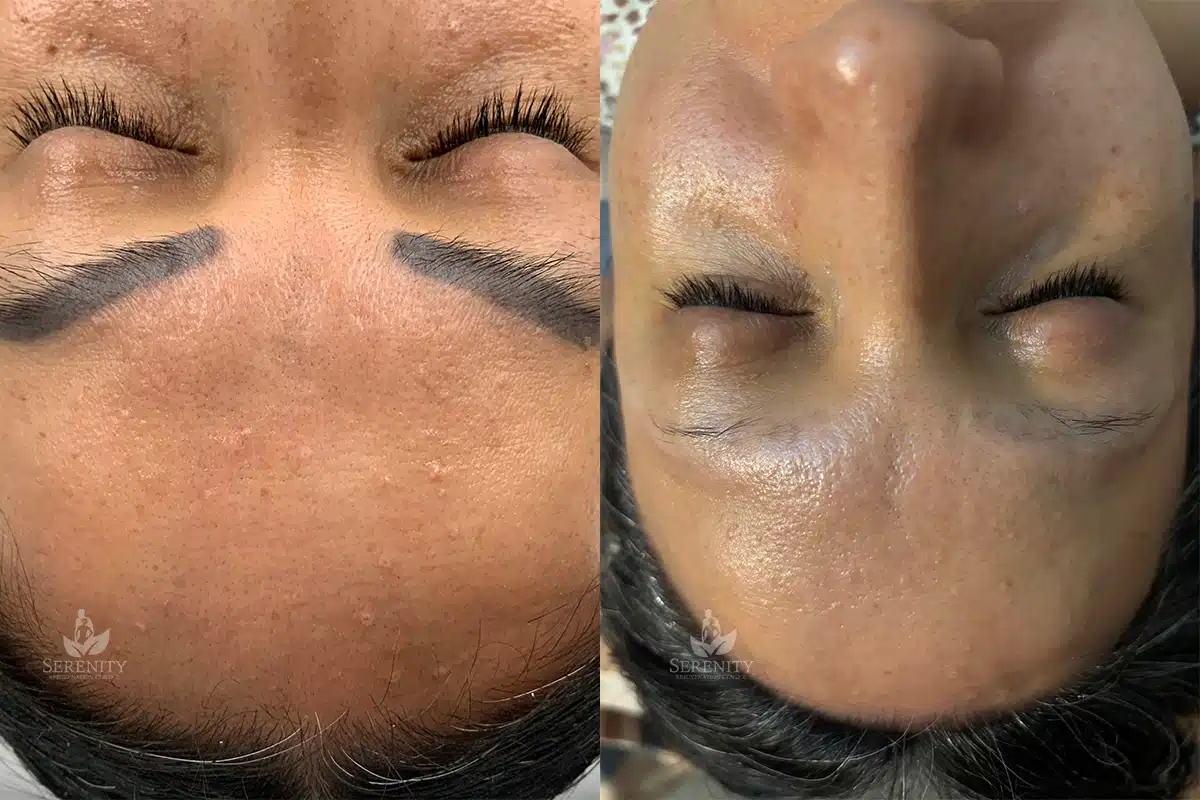
Cosmetic brows, 7 treatments. This was dense, saturated brow pigment; many brows need fewer sessions. Actual patient of Serenity Rejuvenation Center. Individual results vary.
Cosmetic ink is blended, and it contains metals
A body tattoo is usually made of one strong, pure color per area. Microblading and powder-brow pigments are different. To match a natural brow, the artist blends several colors together, and most brow pigments are built on iron oxides (the browns, reds and yellows) and titanium dioxide (a white used to soften and lighten shades).
Those metal oxides are why brow removal needs care. Under strong heat, they can change chemically, and a soft brown brow can turn darker, gray or even black in an instant. This is called paradoxical darkening, and it is the main reason many clinics turn brow work away.
Brows, yes. Eyeliner, rarely.
We treat
- Microblading (hair strokes)
- Powder, ombré and combination brows
- Older brow tattoos that have shifted color
- Fading before a corrective touch-up
Case by case
- The outer edge of eyeliner only
- Full eyeliner close to the lashes needs special internal eye shields; the risk and cost to the patient are high, so we usually advise against it
Color changes are normal. Here is why.
Warm tones often brighten before they clear
The most common surprise with brow removal: brown or warm-toned brows can turn orange, salmon or pink after the first treatments. The laser breaks up the darker components of the blend first, which leaves the warmer pigments showing. This is expected. We keep going, and those tones clear with further sessions.
Red is the slowest color
PicoSure Pro's main wavelength (755 nm, from an alexandrite crystal) is red light. Red pigment reflects red light rather than absorbing it, so reds and warm reds take more sessions. Your plan accounts for this from the start.
When a light blue turns gray
Light blue and aqua pigments are often mixed with titanium dioxide to make them paler, and titanium dioxide can darken under laser energy. It is uncommon, and we plan for it: we start conservatively on light pigments, and we put your skin on a melanocyte-calming regimen from your first treatment, so a true ink change is easy to tell apart from the skin's own darkening. If a pigment does darken, it becomes a darker target that the laser absorbs well, and it usually continues to clear with further sessions.
Darkening that is not ink at all
The far more common cause of darker skin after treatment is post-inflammatory hyperpigmentation (PIH): your own pigment cells reacting to the treatment. It is even more common in medium and darker skin, where it can look a lot like ink darkening; in fair skin it often shows up as lingering redness instead. Either way, it is temporary and largely preventable. If you have any natural pigment in your skin at all, Dr. O'Connell recommends a melanocyte-calming regimen starting right after your first treatment and continuing between sessions. He developed his own hydroquinone-free aftercare, Restoration Biophysics, for exactly this, and he checks every follow-up to tell PIH and ink apart.
How many sessions?
Most brows need fewer sessions than a body tattoo because the pigment sits shallower, but blended and older pigments vary a lot. Expect several sessions spaced about 6 to 8 weeks apart. Your response to the first session gives us the best estimate, and your plan adjusts as we go.
- Each session takes only a few minutes for a pair of brows.
- Brows turn white for several minutes right after treatment. This whitening is expected.
- Brows are swollen and tender for a day or two, with light crusting for about a week.
- Your natural brow hairs usually stay. Any lightening of hairs is generally temporary.
Microblading removal questions
Can laser make my brows darker?
It can with cosmetic pigments that contain iron oxide or titanium dioxide, which is why we use PicoSure Pro and offer an optional test spot. If a pigment darkens, it can usually still be treated, but it takes more sessions.
Why did my brows turn orange or pink?
Brow pigment is a blend. The darker parts clear first and leave the warmer pigments visible for a while. It is a normal stage, not a bad result.
Will I lose my eyebrow hair?
Usually not. Hairs can lighten temporarily, but the follicles are generally unaffected.
Can you fade it for a correction instead of full removal?
Yes. Many patients fade an old or off-color brow so their artist can redo it cleanly.
Book your complimentary brow consultation
Dr. O'Connell will look at your brows, explain what your pigment is likely to do, and tell you whether an optional test spot makes sense.
Text us: 425-644-5560Individual results vary. 14777 NE 40th St, Suite 101, Bellevue, WA 98007.